


Where the wild things are
- jeanneb

- Feb 27
- 3 min read
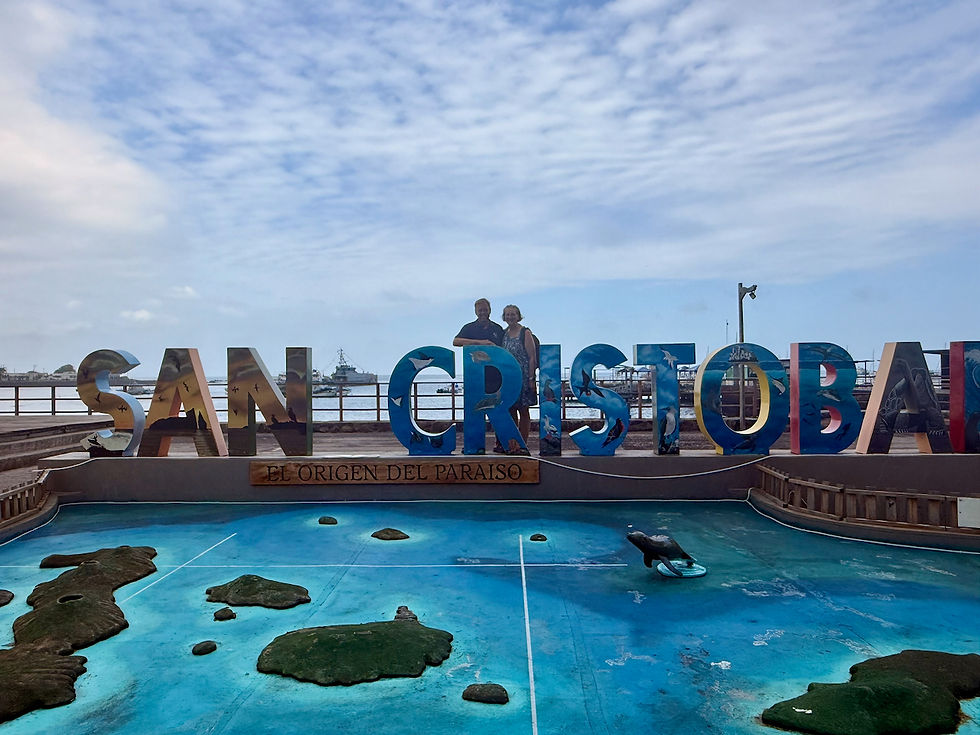
Upon arrival on the island of San Cristobal in the Galapagos, we proceeded to complete the Ecuador check in procedures. First, the boat bottom was inspected by 2 free divers. Upon getting the 'bien' and thumbs up from them a small boat delivered another 11 people to board. The Agent's entourage included the Port Captain, a doctor, a national park official, narcotics officer, customs, immigration and several other people that we aren't sure what they were doing. They checked the engine room, the refrigerator, the freezer, stamped our passports and checked my pulse and blood pressure. It was organized chaos for about 30 minutes when just as quickly as they came -- they left. We were clear to go ashore.

The small town at Puerto Baquerizo Moreno is a charming village with what seemed like more sea lions than people. They were everywhere. In the evenings they would be laying about on the sidewalks, picnic tables or in front of the store keepers windows. In the mornings, the store keepers would do their best to work around them and clean up after their mess. It is just a way of life here.

Our first full day checked in we did an inland tour to visit the summit of one of the now extinct volcanos, see the Tortoise sanctuary and breeding center and ended the day swimming at a beautiful beach with one lone blue footed booby standing sentry for the tourists.

The concierge service of the WorldARC is now in full swing. Known as the 'yellow shirts', these 5-6 people will be meeting us in each port along our journey. They help us order fuel, arrange for our travels between islands and covered the basics like garbage pick up. They also host a dinner each leg of the rally and arrange for tours and group gatherings. Everything has been so smooth with their help. One evening, at the daily happy hour hosted by a local coffee shop, they arranged for the head of the Galapagos-based Ecuador Navy to gave us an official invitation to the islands.

One night while at anchor on San Cristobal Island, we were awakened by the sounds of grunts coming from the deck above. Once on deck, we realized that one of the large sea lions had made its way up the aft stairs from the swim platform and had made himself quite comfortable on our aft deck. Literally over my head! When he didn't budge from his lounging, Dan got the hose out and we sprayed it until he reluctantly slipped back into the sea. A few days later, we discovered that one had made it all the way into our center cockpit and left a trail a mud on the way (at least we are calling it mud)! Good thing we kept the hatches closed!

Traveling to the Galapagos is not cheap. Dingy's are not allowed to 'stay' ashore, so all boat-to-shore traffic leverages a large fleet of water taxis to pick up/drop off at your boat. Each trip is $1/per person. Any trip outside of the towns, with the exception of beaches within walking distance require an official guide. Each guided tour (whether that be scuba, snorkel, hike, or whatever) costs about $200 per person. Restaurants range in pricing but are generally the same as eating out in a metropolitan area in the US. Everything is paid for in US cash. The restrictions and the requirement to have a guide are not really our 'thing'. We much prefer wandering about on our own. That being said, we understand that the intent is to provide for the local economy and to ensure that the natural areas are preserved.

We stayed a few more days on San Cristobal then departed the 40 NM to Puerto Ayora on Santa Cruz Island. We have one more week here in the Galapagos to go through our list of preparations for the sail to Marquesas. So after sending Josh & Raf on their way back home we are back to stocking up on food, fixing a few things and completing our pre-passage inspection checklist.


The sea lions are very accustomed to being around people and are not dangerous. They are everywhere!
Seals sound like a nuisance, are they dangerous?